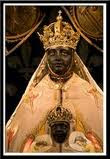
The Heart of the Black Madonna

Sunday, May 22, 2022

The Knights Templar and The Black Madonna

The Virgin of Zabaleta, a member of the Seven Spanish Black Virgins
Brought to Spain by The Knights Templar

 For those of you who have been following my writings, videos and podcast, one aspect of my approach to The Black Madonna that I feel sets my research apart is the focus on how many of them arrived on the European continent.


Illuminated Manuscript 13th Century Knight Templar

 This goes back to my original research, way back in 2005, where I learned through the University of Dayton Marion Library Black Madonna page, that many of the European Black Madonnas were brought to the continent in the hands of The Knights Templar and returning crusaders. The site has evolved much since back then, it was amazing in 2005, but now, it is an incredible resource. I highly recommend it for anyone seeking sound scholarship on The Virgin Mary, specifically from a Catholic Perspective. 

          Here is the link:

https://udayton.edu/marianlibrary/index.php


In any case, this thread fascinated me, and has guided quite a quest on my own, researching every aspect of the Knights Templar and why they would bring these types of images to the European continent in the 12th and 13th centuries.


Our Lady of Rocamadour, France

The era of the Templars was a transformative one in terms of Western Civilization in general, as well as Christianity specifically. Europe in many ways had recovered from the Fall of the Western Roman Empire and had organized itself around both the Nation States as well as Institutional Christianity. As with all cultural transformations as well as initiatives, there are positives and negatives. Christianity was never intended to be an institution in the broadest sense. It was not even meant to be a church or religion. Christianity was meant as a movement to bring together humanity and the cosmos, since Humanity had distanced itself from Divinity and the Universe. There are many reasons for this, again some of them ultimately positive; the development of freedom in humanity, and not so positive, we may kill ourselves in the process. 


The Templars in the beginning were a product of the backlash against both the institutional church as well as the nation state. In the era following the Millennium, Christian Europe had been utterly disappointed when Christ did not come back in the flesh to get rid of all the nasty people and situations of life. The year 999, many communities did not plant crops because they thought the world was coming to an end and why bother. In the century afterwards, there was a general disdain and shock at the corrupt nature of both the church and the state. Both institutions seemed to be quite at odds with the basic tenets of Christianity. In reaction to this, many religious orders were founded to try to recapture the original fervor and purity of the early Christians. The spiritual longing for this fervor, and basic misunderstanding of the Christ impulse, was to think that Christ was in objects, such as relics, or in certain places, such as Jerusalem and the Holy Land. 


It was thought that if one could possess or be in the presence of a relic, or go to the Holy Land, then Divinity could be encountered, and all bad things about human existence: suffering, illness, death and injustice would simply vanish, or the seeker would be assured a direct ticket to heaven. 


The Templars were a product of their times, but in many ways, they actually understood the cosmic nature of Christ. Their philosophy was that both Popes and Kings were a product of the Fall of Man, and if civilization could get to the original purpose of Christianity, neither the Church or Monarchies would be necessary. 


The Templars recognized that in order to be truly Christian, one must have freedom to choose to follow this way. Obviously, this seems counter to what we understand in terms of the crusades, but remember these were the ideals of the Templars, that were not always followed, especially in their later years.

So why were the Templars interested in Black Madonnas and why did they put them along shrines and churches on the Camino de Santiago de Compostela? 


The Templars wanted to create a culture that could contain the Christ. But how to do this while honoring freedom? Their impulse was to invite civilizations into knowledge of Christ through beauty, through the arts. This is why they were such generous patrons of the arts, and were involved in one of the greatest building initiatives in all of human history. Most of the grand cathedrals in Europe were built by Templar patronage.


As Rudolf Steiner stated “Art is a creation of organs through which the gods speak to humanity” 


What are the cathedrals, shrines and specifically The Black Madonnas saying to us? Tune into The Black Madonna Speaks on Wednesday, May 25 for an in-depth look at The Templars and The Black Madonna, to get insights on why this phenomena occurred and how it still is influencing us to this day.


https://podcasts.apple.com/us/podcast/the-black-madonna-speaks/id1622348404

Available through Anchor Podcasts, Google Play, Spotify and Apple Podcasts.


Blessings on your Journey!


Sunday, May 15, 2022

Divine Darkness

Sagittarius A* Photograph from NASA


A super massive Black Hole has been discovered, as well as imaged via telescope, for the first time. Known as Sagittarius A*, (the asterisk is actually in the name of this phenomena) the object is a staggering four-million times the mass of our Sun. For scale, the ring is roughly the size of Mercury's orbit around our star. This structure is a long, long way away from Earth - some 26,000 light-years in the distance. Theories abound as to what exactly Black Holes are specifically. 


With the advent of super powered telescopes in the early 1900’s humanity’s comprehension of the universe has been deeply altered. It is astounding to note that only until recently has materialistic science started to appreciate the existence of “dark matter.” Nigel Smith and Neil Spooner articulated this concept in a paper entitled “The Search for Dark Matter” which was presented in the year 2000 issue of Physics World. Smith and Spooner reported, “Astronomers were ...surprised and disturbed to learn in the 1930’s that our own Milky Way galaxy behaved as if it contained more matter than could be seen with telescopes. This puzzling non-luminous matter became known as ‘dark matter.’ “ What physicists and cosmologists now are concluding is that most of the Universe is actually made up of dark matter, over 95% in fact. 


Dark Matter Photo Courtesy of  the American Museum of Natural History's Hayden Planetarium Space Show Dark Universe


Particularly challenging to the materialistic astronomers in the 1930’s was the observation that the universe was constantly expanding at an increasing speed, and yet there was not an obliteration or spinning out of control of creation. In fact, the universe with all of her inhabitants, keeps expanding uniformly. The key to comprehending this phenomenon of an ever-expanding universe is to visualize the baking of raisin bread. The planets and stars symbolized in the raisins, and the dough is the symbol of the dark matter space in-between the planets and stars.


The science of Astronomy that our modern culture is based upon began in the Chaldean times with the Egyptians. The Babylonians and Indians had elaborate systems of understanding the heavens, as did the Chinese. The theme of the sciences among all the different cultures and ages  at that time, was a deep appreciation of the relationship between the heavens and the earth. Stories of the planets and stars, named and each with an elaborate origin narratives dominated the understanding. The relationship was seen as intimate and influential.

Later, with the advent of Islamic/Arabic science , this relationship was changed to one based on observation alone. The Islamic scholars translated Indian and Persian texts, and added their own perspective to the mix. This began the separation between the heavens and the earth, and also the isolation of humanity in terms of the rest of the universe.

The concept of darkness is often a negative one. I think this stems from the original separation of human awareness of our relationship not only with the cosmos but with divinity. We separated, “in the beginning” and many consequences of that original separation are resonating quite profoundly  to this day. 

Our scientists have long recorded the nature of dark matter, dark energy and black holes. The majority of our universe is made of of dark matter, a substance that holds everything together and allows for the music of the spheres to resonate throughout the universe. We are given cohesion and relationship because of darkness. The black holes are where universes are born and where they go to die. Scientists note that while black holes are considered to be the ultimate nothing, negative matter and so on, these same scientists also report that the basic elements of life - hydrogen and helium - are floating out of these massive structures.

One of Isaiahs prophecies regarding the coming Messiah is found in book 45:3. The verse tells what the Lord will do for the faithful, and is a basic prophecy of the Incarnation of Christ


NASA Hubble Telescope Stellar Jewel Box


“And I will give you treasures of darkness, and hidden riches of secret places, so that you may know it is I, Jehovah, who calls you my your name.” 


Reading this verse, can one consider darkness as something to be feared if God himself is telling you there are treasures there? 


Rich concepts to ponder.


Our Lady of the Pillar, Chartres Cathedral, France


The defining characteristic of The Black Madonna is the color of the skin. While many theories abound as to why Madonnas throughout Europe are Black, one way to consider the symbolism of these images is the concept of Divine Darkness. As the Madonna in art is a symbol of the highest potential in Humanity, and darkness is physical attribute of cohesion, birth of universes and described by the Prophets as containing secret treasures of renewal and salvation, I will leave it up to you to decide how negative, less than and terrifying darkness, the color black to be specific, is actually.


To hear more about Divine Darkness, tune in, download and subscribe to The Black Madonna Speaks Podcast, hosted by me, Stephanie Georgieff. 


The Black Madonna Speaks Podcast


Available May 18 through Anchor FM, Spotify, Apple Podcasts and Google Play.


Blessings on your Journey!


Wednesday, May 4, 2022

The Black Madonna Speaks New Podcast


Dear Heart of the Black Madonna Blog Subscribers and Friends!


It has been a good long while since I posted anything. It was not for lack of trying or desire. The Pandemic upended my existence on numerous levels, and it has taken me this long to find gainful employment and housing in order to create the opportunity to share my discoveries regarding The Black Madonna and The Divine Feminine. To my utter joy and immense satisfaction (mixed in with a good measure of relief for what it signifies) I am finally able to create and post a Podcast. Available through the Anchor podcast platform. As I am for all intents and purposes a one middle aged tech impaired lady that has to figure everything out via Youtube and Google search, the Podcast should soon be available wherever one finds such things.


As a taste for my readers, I am posting the transcript of the first official The Black Madonna Speaks Podcast. At the end of this post, there will be a link to the Anchor platform, where you can listen and download to your hearts content. Please subscribe and if you are so moved, you can support the endeavor through Patreon as a sustaining patron, or through a one time donation at paypal.me/BlackMadonnaHeart. For those who donate over $20 through PayPal, you will receive transcripts and Black Madonna monographs on upcoming episodes for one year.  


Welcome back to The Black Madonna Speaks with me your host, Stephanie Georgieff. Thank you so much for sharing your valuable time with me, and for those who have subscribed, thank you and a special thanks to my patron supporters, especially Linda Rheinschild, Jerrilyn Brusseau and Hettienne Grobler and Jennifer Johnson Lee whose sustained generosity and patience these past several years has made my writings as well as this podcast possible. For those of you who would like to support the podcast, please visit Patreon at The Black Madonna Speaks https://www.patreon.com/join/TheBlackMadonnaSpeaks?for more information on how to do that, and also please spread the word, share with your friends whom you think would benefit from this timely and nourishing exploration.


For the next few weeks, The Black Madonna Speaks will cover the history, lore, artistic presentation and narratives surrounding the Black Madonna as an artistic genre. In the coming months, I will be honored to share with you some of our modern day artists and authors surrounding the Black Madonna. There are various websites, institutions and such that celebrate and document the Black Madonna as well as numerous studies and personal reflections on the subject. For me, it has been this marvelous journey, a tandem experience of deepening my relationship with the Spiritual World through a feminine context, but also a fascinating journey as to the origins of Christianity as reflected through art. The goal of my work is to share and inspire. In no way do I claim to be the expert on anything other than how to make a delicious omelette, and my presentations are from my conclusions based on my research with a bit of intuition and imagination mixed in. My hope is that our explorations will spark  in you a desire to delve more deeply into the mysteries of The Black Madonna yourself. The only “wrong “ way to understand the Black Madonna is that she might be an agent of oppression, which honestly I have yet to see any sort of utilization of this image to oppress anyone. If anything, an image of Divinity presented with dark skin seems to be quite liberating to all who would witness such a gesture.


The main  tenet of my study of the Black Madonna comes from Rudolf Steiner, philosopher and clairvoyant, who for me has opened up a cosmic tableau as to how to contextualize and comprehend the Cosmic Christ.  


In a lecture cycle entitled The Influence of Spiritual Beings on Man, Steiner states that “Art is the creation of organs through which the gods are able to speak to humanity.” 


If this is true, and I personally accept it as truth, then what specifically are these Black Madonnas conveying to us, not only at the time of their creation but  in our modern times? 


So how do we decipher what these images are saying to us? Obviously, one can, but one’s own prejudices as well as cultural and spiritual spins can influence perceptions on what the gods are trying to say to us through The Black Madonna. I officially have always stated that I am unabashedly biased towards mystical Christianity. I am also a scientist, and somewhat of a historian. My scientific background informs how I seek answers to questions. I honestly think being trained in natural medicine, specifically Naturopathy and Chinese Medicine, creates quite a method for looking at correspondences as well as the etiology of any subject. Obviously, correlation does not always mean causality, but in many instances it really is quite revealing and cause for reflection when one looks at the timing of certain events, where they are happening and also who is involved.


I was asked years ago to speak on The Black Madonna at a local workshop at the Anthroposophical Society of Los Angeles community center. I had recently written a paper on the subject for a program I was enrolled in, on Spirituality and Culture, which included numerous interviews and literature searches at the time. What fascinated me in my original study was why these obviously non-European looking images were all over Europe, especially when the bulk of the population was Caucasian, and not what one called global travellers, in fact much of the population never went more than a few miles from their villages or cities. 


At the time I was doing my initial research, the internet was just forming. One of the few online options to study the Black Madonna was the University of Dayton Ohio, Marian Library page. In the introduction section, the page stated that many Black Madonnas in Europe made their way to the continent in the hands of returning Crusaders and Knights Templar. I found this absolutely fascinating, and noticed my other academic, art history and spiritual research did not focus on this particular thread. 


To be honest, as an American protestant, I had only been exposed to mostly Renaissance religious art through famous painters of the era; Michelangelo, Rafael and Da Vinci to name a few. Modern Madonnas ran the gamut of racial expression, but were usually dependent on where they were created, say Mexican Madonnas looked Mexican and so on. The color of the skin of a Madonna never was in my consciousness. Since the historical mother of Jesus was from Palestine during the Roman occupation, as well as being a Jew, I always thought that she probably had brown skin, dark hair and eyes typical of the people of her region. Since I am European American, skin color for me never meant anything,  meaning I never gave a second thought to images of pale, pink cheeked, blond, blue eyed Madonnas. There was also an undercurrent that Christianity was something Europeans “Did” to other continents, meaning, Christianity was brought with explorers and colonizers and forced upon locals populations, further justified with European depictions of Christian divinity placed in churches and schools across Asia, Africa and the Americas.


With my research, and again what I will be presenting are my findings and discoveries, obviously there may be other perceptions as well as discoveries, much of what I assumed to be true in terms of the history of Christianity as well the evolution of art, was deeply challenged by the genre of The Black Madonna. So many threads, so many aspects, so many delightful digressions in terms of the evolution of the mysteries, the Divine Feminine, ancient Christianity and even science and astronomy. 


So many questions, and the answers for me just keep coming, it truly is the never ending story as to humanity’s purpose in the cosmos in relation to the spiritual world. 


So what is a Black Madonna specifically? The term Black Madonna is a label of an artistic genre applied to dark skinned and black images of the Virgin Mary and infant Jesus, a dark Madonna in Europe to be specific. Some groups find the term offensive, making a point to identify skin color, no one says “white madonna” when referring to such works of art, why just Black when the Madonna is not European, they are all Madonnas. Obviously on one level this is true, but I am not in charge of academic nomenclature regarding genre’s, so apologies extended to those who feel excluded by the title Black Madonna. Since it is currently the title of this genre, I will use it for the foreseeable future. 


One of my first “discoveries” concerning the Black Madonna was a paper presented at the American Association for the Advancement of Science on December 28th 1952. While there were many Black Madonnas in Europe, it was a curiosity as to what they were representing. A study was commenced regarding about 100 Black Madonnas in Europe. The study categorized these works of art into three groups.


First Category: Madonnas who were created by artists in North Africa and resembled the physiognomy of their creators. The Coptic monks of North Africa, Egypt and Ethiopia started their migrations to Europe in the 4th century and brought their art with them. Starting in the 7th century, when Islamic incursions began in earnest in the Arabian Peninsula as well as Africa, the migrations of clergy increased.


Second Category: Images of the Madonna and Child that were centuries old, and darkened by candle smoke and grime of the centuries. I like to say, a thousand years on an altar does something to a gal’s skin.


Third Category: There is no known reason why the images are black or dark.


The kicker is that the last category has the most Madonnas in it. This fact, coupled with the relationship with the Knights Templar I found quite intriguing.


When I planned my original presentation, my initial thesis was to see when these madonnas were created, by whom and what the stars were saying during the time of their creation. I wanted to explore Astrosophy, which is spiritual in nature, not predictive, emotional or qualitative such as Astrology, or materialistic which is Astronomy. Astrosophy conveys what the angelic world is relaying to humanity at a certain time, I have found it quite profound in terms of understanding historical events, what was going on during the American Civil War for instance, or what were the stars saying whilst Rafael was painting the Sistine Madonna. In my book on The Virgin of Guadalupe, I have a section on the Astrosophy of the apparitions of Guadalupe, absolutely fascinating, so I thought I would study a couple of famous Black Madonnas and do the same thing.


What I found out was that few if any Black Madonnas have any artist associated with them. If there is an artist, it is the author of the Luke Gospel, the Evangelist Luke. In fact, there were only guesstimates in terms of the dates of the creation of the images, and many of the Black Madonnas who were not brought by the Crusaders or Knights Templar have stories of discoveries. In future podcasts, I will present the narratives of many Black Madonnas, and you will come to see what I am talking about. 


So we have several “migrations” of Black Madonnas to the European Continent. 


Some Black Madonnas were discovered by St Helen of the Cross, the mother of Constantine the Great, who went on Pilgrimage to the Holy Land in the 4th Century. Helen is a fascinating character, whose story we will also explore in future segments. For now, what we need to realize is that Helen was one of the first Christian patrons of art and architecture. She is credited for “discovering” all the sites of Christ’s life and deeds, as well as where Mary, Mary Magdalen and certain Old Testament characters lived or experienced miracles in Israel, Egypt and Palestine. The famous Polish Black Madonna, our Lady of Czestachowa is reported to have been discovered by Helen and brought back to the Byzantine Court. 


Many Black Madonnas had their origins either in Byzantium or Asia Minor and North Africa, and traveling through Byzantium before going into Eastern and Western Europe. 


As we said before, the Monks of North Africa started their migrations in the 4th through the 7th Centuries and brought their art with them.


Many of the Byzantine and North African Madonnas adorned churches and shrines throughout Europe, but were hidden as the Muslim incursions spread through Europe. This is quite evident in the Iberian Peninsula, what is now modern Spain, and somewhat true in the South of what is now Modern France. 


With the Crusades, there was a large group of Black Madonnas which both returning Crusaders as well as the Knights Templar brought with them to the Continent. This happened in the 12th through early 14th centuries. From the time of the 9th Century through to the French Revolution, Dark Madonnas became quite the draw for Pilgrims. It is of note, and we will explore this theme quite thoroughly in future programs, that both personal Black Madonnas as well as famous ones in Shrines and Cathedrals, are placed along sacred sites on the Camino de Santiago de Compostela. There is a remarkable correspondence between the location of the shrines, cathedrals, and churches where there are Black Madonnas and star networks, say the Virgo constellation or the Milky Way. 


What does the French Revolution have to to with Black Madonnas? Quite a bit. While the rallying cry of Freedom Equality and Fraternity was the theme of the revolution, what was also true was a violent reaction occurred against the institutionalized church at the time. Ordinary people called the revolution the reign of terror, where mob and military frenzies created pop up instant courts with Justice and executions instantaneously and randomly applied to everyone. The Napoleonic soldiers had a strange fondness for burning Black Madonna statues in the middle of towns where their shrines were located. It seems that the terror inspired the re-hiding of many images until cooler and less violent heads prevailed. Black Madonnas who were burnt include the silver gilt statue at Chartres Cathedral as well as the Black Madonna of Le Puy en Velay. The Black Madonna at Einsiedeln was hidden so that the invading soldiers would not burn her. Luckily, there were many copies as well as drawings of the original Black Madonnas that enabled artists of the day to create similar images for future generations to venerate. In the case of the Madonna at Einsiedeln, she was one of the Madonnas that was dark due to age, and was painted white before being placed back in the shrine. The locals had a fit and the monks painted Einsiedeln very black, and she is venerated to this day as the Black Madonna of the Germanic peoples. 


The Black Madonnas went with Spanish and French colonists to the Americas and beyond. These Madonnas have interesting stories of survival, of shipwrecks, storms and such. 


In the 1980’s there was a resurgence in awareness of Black Madonnas across the world. While Europe had always treasured these Madonnas, the political situation in Eastern Europe, specifically Poland highlighted their presence. Lech Walensa of the Solidarity movement was inspired by Our Lady of Częstochowa and she became a focal point of resistance to the communist government. Pope John Paul the Second was a Polish Pope, and he was also dedicated to The Black Madonna of Poland, Częstochowa. China Galland wrote Longing for Darkness, and Ean Begg wrote the Cult of the Black Virgin, both books are classics in the Black Madonna literature awakening the West to what the East and the South always knew regarding these Madonnas. In the Secret Life of Bees, there is a remarkable story of a Black Madonna entwined in the narrative, while the Black Madonna adorns the jars of Honey of the heroine of the story. 


As our era is one of reckoning on many levels, The Black Madonna is becoming a healing image for the marginalized, specifically those who suffer the devastating consequences of racism. In my own journey, I have found that these images are healing to everyone as they portray divinity as dark. Such images convey the inclusive and universal quality of Divinity, that often gets lost in materialism and politics. For me, as I have said before, I find these images as a portal to a deep message from the spiritual world, that we are treasured and encouraged, that we are to participate in the cosmic unfolding of the universe, the universe of agape. 


I hope my reflections warm your soul and inspire your spirit as we delve into the many mysteries of the Black Madonna. Make sure to follow me on twitter @BlMadonna, like me on Facebook at The Heart of the Black Madonna, Instagram of the same name and subscribe to this Podcast. If you are so moved, please become a patron, either sustaining or a one time donation, every penny is appreciated and goes towards helping to create this podcast. 


Tune in next time, where we will explore the artistic presentation of The Black Madonna and possible meanings of her many symbolic gestures regarding the timing of the discoveries, migrations, the placements and the images as a whole. Since art is the method by which the Gods are speaking to humanity, what a message the Black Madonnas are sharing!


Until next time: This is Stephanie Georgieff wishing you many blessings on your journey

Please visit Anchor Podcasts for all new episodes!

https://anchor.fm/stephanie-georgieff

Thursday, March 10, 2022

Fear Not for I am With You Always


Ozeryanskaya icon, Kharkhiv, Ukraine

                                                         Our Lady of Kazan, Moscow, Russia


I have never understood why war unites like nothings else on earth. The word is often used in promotional slogans for certain things such as eradicating diseases, addictions or economic class. In Christian cosmology, the word is also used for events between good and evil forces. We are told that a great war in heaven occurred and the vanquished spirits of negativity fell to earth, where they seem to have found quite a home in the practice and experience of war.

The word and practice of war is a profound one, in that it is essentially the legally and culturally accepted perpetration of mass violence. Behaviors that would be unthinkable in normal circumstances, are cheered on in war. Everything stops, everything is crystal clear, everyone knows their place and acts accordingly. 

Religion plays an interesting role in war. The unbelievers and those who find ritual tedious fall into place, uttering prayers and attending services all in the name of war. Those practiced in faith tradition find themselves very close to spirit during such times, and sing songs lauding the justification for their actions. Whom does the Spiritual World pay attention to during these times? Are some people at the front of the request line instead of others depending on the justification for war? 

Ritual often accompanies threshold experiences on the earthly sojourn. Women experience thresholds when giving birth, traditionally men experience it in the battlefield. We all experience thresholds surrounding death. The deceased crosses the threshold into another life, and those left on earth mourn the separation. Enforcing death on others is a rather schizophrenic action here on earth. It seems that killing is bad under certain circumstances, while is glorious and sanctioned in others. What seems to be a universal response to killing, is the grief of the loved ones whose beloved was taken away, as well as this loss as a justification for further sanctioned killing. 

War is sanctioned, acceptable mechanized killing. In the Old Testament, the wars in the establishment of the Kingdom of Israel are lauded. The slaughter of every Caanite man, woman and child is justified. I often wondered how the Cannanites felt about this. The final plague that hit the Egyptians, which led to the release of the enslaved Hebrews as the death of the first born son. It grieved the population so much, as well as the Pharaoh, that the petition from the Jews to be set free was finally granted. He later regretted his decision, and led his army to a watery death in the Red Sea. 

The foundational act of Christianity is a state sponsored brutal execution. This horrific act on an innocent man is recognized as the catalyst for eternal life of the spirit. The sacrifice was the key to transforming the earth and humanity. It is the foundation stone for what humans later rationalize as redemptive violence. In a local military chapel, we see a stained glass window with a soldier kneeling before a helmet topped gun, and the phrase beneath it proclaiming "There is no greater love than when a man lays down his life for his friends." When can such love be applied without violence or death is my question. Could it be that the Crucifixion was meant to be a one time thing, and then we were supposed to consider other methods for enhancing redemption?

In the Orthodox Christian tradition, one of the worlds most ancient forms of Christianity, traditionally a man who kills during war is excommunicated for seven years. This means no access to Communion for seven years, as the soldiers who kill are seen as unworthy and unclean to accept the sacrament (which is seen as the literal transubstantiation of bread and wine into the body and blood of the Savior.) In a response to the wanton violence of the warrior class of nobles during the middle ages, the concept of a Just War was dusted off as a method of foisting violent young men onto foreign soils, so as to give the locals a break from the raping and pillaging. 

Originally invented by ancient Egyptians, the Medieval concept of purposeful warfare, Just War,  was implemented into the tradition of Chivalry. Protection of the weak, adherence to Christian values (except in the case of killing foreigners) and the chaste love of an unattainable perfect woman, along with forgiveness of all past and present sins during the quest, sweetened the deal. Rules for sanctioned slaughter created things like scheduled warfare, say not on feast days, festivals or Sundays, along with no violence on sacred ground. No violence of any kind was to take place in Churches. These rules were created and followed for the most part during numerous conflicts. Obvious confusion arose amongst the ranks when Christians fought Christians, say in the 100 Years War and various Crusades, but all was justified and allowed. What I have never quite understood is how one returns to the mundane tedium of daily life after participating in such violence. It seems only until after the First World War, such trauma was given a name for those returning home after the horror of trench warfare. 

War never really solves anything, it just postpones conflicts, enriches the powerful and perpetrates grief for all. Neither side ever really recovers during peace time, and the conflict simply arises again and more violence ensues, because the hard work of collaboration, forgiveness and community has not been done. 

Death has confounded the living for eons. When loved ones die at the hands of another, it gives an outlet for anger over the loss. Losing a dear one in their sleep, whom do you blame for your agony? An enemy who took away your loved one, your home and routine, there is someone to blame, and in several generations for the cycle to start over again. War creates a structure for this, and is a deep reason for the perpetual state of violence.

I often contemplate the story of Mary, mother of Jesus. Who was she really, does she still exist, and what are all those apparitions about that seem to begin in earnest during the Middle Ages? How can one being be omnipresent in different outfits and languages? What always seems to be the theme of the messages is that horrors are to come, pray, repent and be loving to one another to avoid the catastrophe. 

This historical Mary gave birth in a strange place to adhere to an oppressive governments census, for tax purposes. The family became refugees to escape violence perpetrated on infant boys, so the Roman governor would hold onto secular power. Mary watched as her son became a leader for their people, only to be unfairly accused and tried, subsequently publicly executed in the most public, vile and agonizing way. Later, she is seen as the focal point for the foundation of the Christian Movement, and had the miracle of her beloved come back to her in the flesh. 

As an art form, Mary is the symbol of the highest potential in humanity, that of collaborating with the Spiritual World to birth the Christ Impulse on earth. During times of plague, images of Mary have been paraded around the community to heal from the affliction. In other cases, banners with her image are carried into war.

Violence and war are humanity's way of forcing desires upon others. Talk and negotiations are tedious and do not lead to desired outcomes in a timely manner. Violence is the ultimate action whereas humanity gives suggestions to God. Can one justify violence to protect others? What is the true and proper response to injustice? Is violence transformative? Can redemption come through violence? 

Some of the most magnificent music ever written has come in response to impending or completing war. Rachmaninoff's All Night Vigil was composed and performed to benefit the World War One effort in Russia. When the Bolsheviks took over, all religious music was silenced. 

At this writing, the violence is raging in Europe, but it is also raging in Syria, Yemen as well as in homes and streets all over the globe. Families are some of the most violent institutions on earth, marriage and romantic partnerships are the leading cause of death for women.  How such things will stop is actually up to us. As we hear in the wisdom scriptures, there is a time for everything. How can we make it never time for violence and war?


How do we wrap our arms and minds over the incredible cruelty we see before us? The atrocities and suffering are nothing new on earth, but this time, for a large segment of the population, the victims look just like their neighbors, their family members and coworkers. It is not hidden like so much domestic violence. Modern technology and social bias is showing war in all of its consequences to the developed world, and those seeking relief are touching us in ways we have been able to ignore in other situations. Oh, those terrible wars, violence and refugees, that is far away and involves people who look and worship differently than we do, it does not strike a chord as deeply as the specter in Ukraine, Hungary, Russia and Poland.

We are also seeing the consequences of the perpetrators of violence and war. The aggressors have mothers and children, they are searching for answers and are just as heart broken as the victims. We see mercy shown to the soldiers families just as we see mercy greeting those crossing the borders. I often think of the song "When Will They Ever Learn" during times like this, when will be learn that war is really useless, horribly useless? 

Humans often make wrong choices, but in every situation there are often two pathways. When we choose the difficult and harmful pathway, the spiritual world helps us to transform our deeds. We were created to transform everything from the earth to the cosmos to ourselves. 

How can we transform this tragedy into something good, beautiful and truthful?

These are the questions we must ask ourselves. Life hangs in the balance, the future is in the balance, what choices are we to make of this situation when nuclear powers are clashing and the innocent are bombed while fleeing? 

Can we learn? What is your, what is our choice going to be?

The Black Madonnas have narratives of endurance, particularly in the face of war. Seeing the rally cry to alleviate the suffering of those fleeing the bombs is a beautiful choice. It is a model for the present and future, that so much energy and response can be focused on loving our neighbors, healing the earth.

What choice will you make?